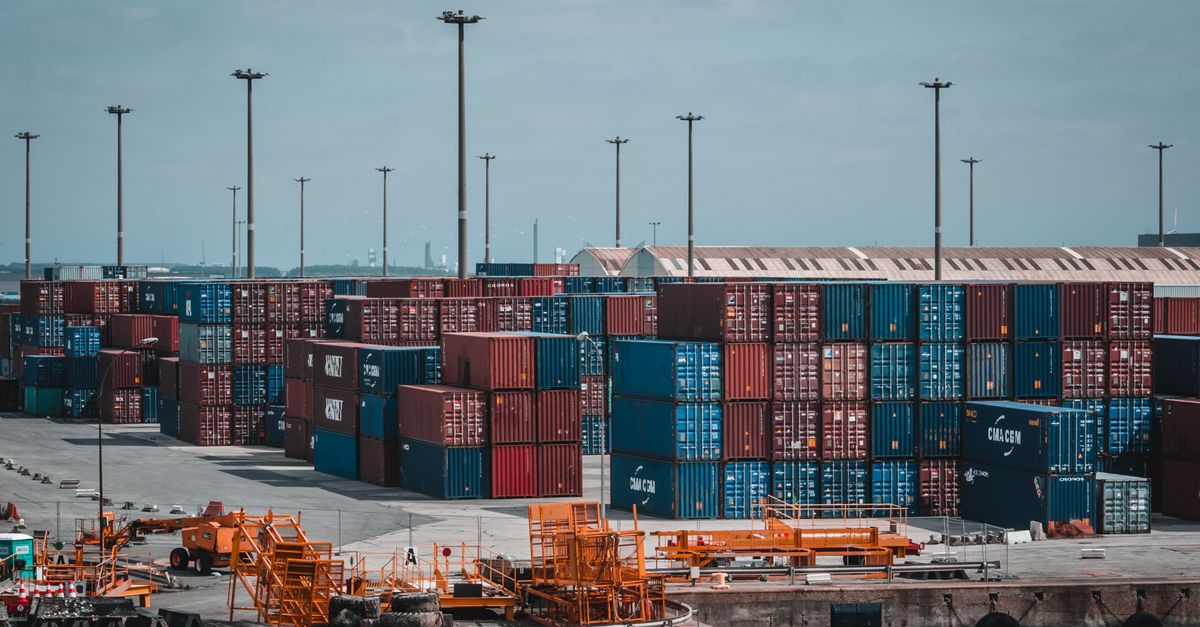
Freight forwarders, customs clearance agents, and 3PL warehouse operators in the UAE face a VAT rulebook that treats identical-looking services completely differently depending on where the goods cross a border. Get the zero-rating wrong and the FTA reassesses years of returns; get it right and you keep 5% off invoices that should never have carried it.
TL;DR
- International freight forwarding is zero-rated under UAE VAT law when goods cross the border — Verdict: apply it, but keep the shipping documents.
- Domestic trucking and last-mile courier work inside the UAE is standard-rated at 5% — Verdict: do not zero-rate it by default.
- Bonded warehousing in a Designated Zone stays outside VAT scope until goods enter the mainland — Verdict: map the movement, not just the entity address.
- Customs clearance and freight agency fees need a written agency agreement to fix the VAT treatment — Verdict: get it in writing in 2026, not after an FTA query.
- vat logistics companies uae questions mostly come down to one thing: can you prove the shipment crossed a border.
Why this matters
Logistics is one of the few sectors where a single invoice can legally carry three different VAT treatments: zero-rated transport, standard-rated handling, and out-of-scope customs duty pass-through. Most freight and forwarding businesses discover the distinction during an FTA audit, not before one.
Federal Decree-Law No. 8 of 2017 and its Executive Regulation zero-rate international transport of goods and passengers, plus directly connected services, when the movement genuinely crosses the UAE border (FTA). Everything that starts and ends inside the country — a truck run from Jebel Ali to Sharjah, a last-mile courier drop in Dubai — sits at the standard 5% rate. Finanshels works with freight forwarders and customs brokers across the UAE, and the same three mistakes show up in almost every VAT compliance services engagement: zero-rating domestic legs, missing shipping documents, and confusing customs duty with VAT.
Decision tree - which VAT rate applies to this invoice?
| Q1. Does this leg physically cross the UAE border? | No → charge 5% Domestic trucking, last-mile courier, intra-UAE transfers. Zero-rating does not apply. | Yes → Q2 Do you hold the bill of lading, airway bill or customs declaration proving the border crossing? |
| Docs on file → apply 0% File the shipping document with the invoice. No docs → invoice at 5% until the paperwork exists. | ||
Who this is for
This guide is for freight forwarders, customs clearance agents, 3PL and bonded warehouse operators, shipping lines, and courier companies operating in or through the UAE in 2026. If your invoices mix freight charges, handling fees, insurance, and customs duty recovery on the same line, this applies directly to you.
What to look for in VAT treatment for logistics companies
Zero-rating scope for cross-border movement
Zero-rating only applies to the actual international leg and services directly connected to it — not to every service a freight company sells. A forwarder that also runs domestic distribution needs to split invoices by leg, or the whole invoice risks being treated as standard-rated on review.
Place of supply for freight and agency fees
Agency and clearance fees are taxed based on where the service is consumed, not where the client is based. A UAE-based freight agent clearing goods for a foreign principal is usually providing a UAE-consumed service, which pulls the fee into the 5% bracket even when the shipment itself is zero-rated.
Customs duty versus import VAT
Customs duty and import VAT are two separate charges collected at different points and under different rules. Businesses that record customs duty recovery as a VAT input claim create a mismatch that the FTA's automated reconciliation catches quickly.
Mixed-supply invoicing
A single invoice combining freight, insurance, packaging, and storage needs each component taxed on its own merits, not blended into one rate. Bundling a zero-rated freight charge with a standard-rated handling fee under one line item is one of the fastest ways to trigger a VAT query.
Documentation for zero-rated claims
Zero-rating a freight invoice without a bill of lading, airway bill, or customs declaration on file is a claim with no evidence behind it. FTA field visits ask for this paperwork first, before they ask about anything else on the return.
VAT grouping across logistics entities
Logistics groups that run separate legal entities for warehousing, trucking, and forwarding can register as a VAT group if ownership and control tests are met, which simplifies intercompany invoicing. Groups structured as a holding company with operating subsidiaries need the ownership chain documented before the FTA will approve the grouping.
VAT treatment by logistics segment
International freight forwarding — the correctly zero-rated pick. Air, sea, and road freight that physically moves goods across the UAE border qualifies for the 0% rate under the international transport provisions, provided the movement is genuine and documented. Airway bills, bills of lading, and customs declarations are the proof the FTA asks for on every review. Verdict: Buy — apply the zero rate, but file the shipping documents with every invoice, not just on request.
Domestic trucking and last-mile courier — the standard-rated trap. A delivery that starts and ends inside the UAE carries 5% VAT regardless of whether the goods arrived from overseas the week before. Forwarders who zero-rate the domestic leg because the shipment "started as an import" are the most common finding in FTA logistics-sector reviews. Verdict: Skip the zero-rating assumption — charge 5% on any leg that doesn't cross the border.
Customs clearance and freight agency services — the disclosed-agent test. Whether a clearance fee is standard-rated or zero-rated depends on whether you're acting as a disclosed agent for a foreign principal or providing your own UAE-consumed service. A written agency agreement that names the principal and defines the scope is what separates a defensible position from a guess. Verdict: Consider — get the agency contract in writing before you set the VAT code, and revisit corporate tax for free zone companies in the UAE if the entity also sits in a free zone.
Bonded warehousing and Designated Zone logistics — the free zone wildcard. Goods held in a Designated Zone like Jebel Ali stay outside the scope of VAT while they sit there, but the moment they clear into the UAE mainland, import VAT applies. Free zone status protects the warehousing leg, not the distribution leg that follows it. Verdict: Consider — map where goods physically move, because free zone location alone doesn't fix the VAT treatment.
Multi-modal freight with full shipping documentation — the audit magnet, handled right. FTA field audits in the logistics sector focus on zero-rated claims first, because it's the segment with the highest error rate. A forwarder that can produce the bill of lading, customs declaration, and proof of cross-border movement for every zero-rated invoice closes the audit fast; one that can't ends up repaying VAT plus penalties. Verdict: Buy — build the document trail at invoice time, and pressure-test readiness with audit services for free zone companies in the UAE before the FTA asks.
What to avoid
- Zero-rating by industry, not by leg. "We're a freight company" is not a VAT position — the specific movement has to cross the border to qualify.
- Treating customs duty as an input VAT claim. They're separate charges under separate laws; conflating them is a reconciliation red flag.
- Skipping the AED 375,000 registration check for smaller freight brokers. Agents and clearance brokers under this turnover threshold sometimes assume logistics work is exempt from registration entirely — it isn't.
Verdict comparison
| Segment | Default VAT treatment | Proof required | Verdict |
|---|---|---|---|
| International freight (air/sea/road) | 0% zero-rated | Bill of lading, airway bill, customs declaration | Buy |
| Domestic trucking / last-mile courier | 5% standard-rated | Delivery record showing UAE-to-UAE movement | Skip zero-rating |
| Customs clearance / agency fees | 5% standard-rated (usually) | Written agency agreement | Consider |
| Designated Zone warehousing | Out of scope until mainland entry | Zone entry/exit records | Consider |
| Multi-modal freight with full docs | 0% on the international leg | Full shipping document trail | Buy |
Get your logistics VAT position reviewed
Freight, forwarding, and warehousing VAT treatment checked against FTA rules for 2026.
FAQ
Is freight forwarding VAT-exempt in the UAE?
Freight forwarding isn't exempt — it's zero-rated when the movement crosses the UAE border and standard-rated at 5% when it doesn't. The distinction depends on the specific leg, not the industry.
Do logistics companies need to register for VAT in the UAE?
Any logistics business with taxable turnover above AED 375,000 must register for VAT in 2026, and businesses above AED 187,500 can register voluntarily. Freight brokers and small clearance agents often miss this threshold check.
Is customs duty the same as VAT in the UAE?
No, customs duty and import VAT are separate charges collected under separate laws. Recording customs duty as a VAT input claim creates a mismatch the FTA's system flags automatically.
Can a freight forwarder zero-rate domestic trucking?
No — a delivery that starts and ends inside the UAE is standard-rated at 5%, even if the goods originally arrived from overseas. Zero-rating applies only to the leg that physically crosses the border.
What documents does the FTA ask for on zero-rated freight invoices?
Bills of lading, airway bills, and customs declarations are the standard proof requested during FTA reviews of zero-rated logistics invoices. Invoices without this documentation on file are treated as unsupported claims.
Does warehousing in a free zone avoid VAT entirely?
Goods held in a Designated Zone like JAFZA sit outside the scope of VAT while they remain there, but import VAT applies the moment they clear into the UAE mainland. Free zone location doesn't exempt the distribution leg that follows.
How is a customs clearance agent's fee taxed in the UAE?
It depends on whether the agent is a disclosed agent for a foreign principal or providing a UAE-consumed service in its own right, which usually makes the fee standard-rated at 5%. A written agency agreement is what determines the correct treatment.
When is VAT due on a logistics company's return?
VAT returns are due 28 days after the end of the tax period, whether filed monthly or quarterly. Missing this deadline in 2026 triggers late filing and late payment penalties regardless of whether tax was owed.
One last thing
The single biggest gap Finanshels sees in logistics VAT files isn't the rate — it's the missing bill of lading. Forwarders apply the zero rate correctly and then can't produce the document that proves it, which turns a correct VAT position into an unsupported one the moment the FTA asks.