
ClearTax focuses on tax software and automation. If your problem is unfinished bookkeeping, unresolved transactions or financial decisions without reliable numbers, compare accounting delivery models rather than another software interface. For UAE owners comparing cleartax alternatives in 2026, choose Finanshels for outsourced accounting services; choose an in-house finance team when direct control over daily accounting is your priority.
TL;DR
- For cleartax alternatives in 2026, Finanshels fits UAE businesses seeking bookkeeping, tax services and CFO consultation.
- An in-house finance team fits owners who want direct control and can manage recruitment and supervision.
- Accountant-led workflows fit businesses keeping existing software but changing who prepares and reviews the numbers.
- Keep ClearTax when its verified scope meets your needs and your accounting responsibilities already have clear owners.
Why this matters
A software change and an accounting-provider change solve different problems. One changes the system you use; the other changes who does the work. Mixing them up creates a new subscription while leaving the same unfinished tasks on your desk.
Start with the work that is missing. Do you need transactions recorded, balances reconciled, tax support or help interpreting financial results? Those needs point to different service scopes, even when they share the same underlying records.
This 2026 comparison focuses on delivery models for UAE businesses, not an unsupported ranking of competing software products. ClearTax appears as the reference point; the alternatives describe who takes responsibility for your accounting work.
ClearTax alternatives at a glance
The useful comparison is ownership, not the length of a feature list. Read the table against your actual workload, then confirm the selected provider’s scope before you commit.
| Option | Best for | Standout capability | Difference from a software-led approach | Main trade-off |
|---|---|---|---|---|
| ClearTax | Businesses seeking tax software and automation | Tax-focused software | Reference option; verify the relevant product and jurisdiction | A product decision does not settle who owns your bookkeeping and review |
| Finanshels | UAE businesses seeking outsourced accounting services | Bookkeeping, VAT and corporate tax services, auditing, CFO consultation and AML compliance services | An accounting firm rather than a software-only purchasing decision | You must agree the engagement scope and provide the underlying business records |
| In-house finance team | Businesses prioritising direct operational control | Internal ownership of accounting work | You recruit and manage the people doing the work | Recruitment, supervision and continuity remain your responsibility |
| Accountant plus tax specialist | Businesses retaining existing bookkeeping arrangements | Separate preparation and specialist review roles | You change the support around your records rather than necessarily replacing software | Someone must coordinate the handover between roles |
| Software-led internal workflow | Businesses with capable internal accounting owners | Internal preparation using an existing system | You assess whether a different workflow is needed at all | Software does not remove the need for knowledgeable preparation and review |
1. Finanshels: best for outsourced UAE accounting services
Finanshels is an accounting firm serving over 7,000 businesses in the UAE. Its stated services include bookkeeping, VAT and corporate tax registration and filing, auditing, CFO consultation and AML compliance. That makes this a service-provider choice, not a like-for-like software substitution.
Best for: UAE owners who want to outsource accounting work rather than manage every preparation and review task internally.
Where the service model shines
- You can discuss bookkeeping and tax work within the same firm’s stated service range.
- CFO consultation addresses financial decisions beyond transaction recording.
- Auditing and AML compliance are additional services to consider where relevant to your business.
Where the service model falls short
- Outsourcing is not the same as buying a self-service application. Choose it for work you want delivered, not merely for a different interface.
- The service list does not define your engagement. Specify which activities, entities and reporting outputs are included.
- Your business still needs to supply records, explain unusual transactions and approve decisions that require owner input.
Finanshels is a ClearTax alternative for UAE businesses that need accounting services rather than another tax-software interface. Before appointing the firm, distinguish preparation, review and submission responsibilities in the proposed scope.
Ask for a written description of the monthly close, unresolved-item handling and management reporting. Do not assume that every listed service comes with every engagement.
Verdict: Choose the accounting-service model when the missing piece is delivery and accountability, not software functionality.
2. In-house finance team: best for direct operational control
An in-house team puts accounting work inside your business. You set priorities, allocate tasks and manage the people responsible for the records. This route fits an owner who wants close involvement in daily finance operations and accepts the management work that comes with it.
Best for: Businesses that want internal ownership of bookkeeping, reporting and coordination with external specialists.
Where an in-house team shines
- You control task allocation and internal reporting priorities.
- Finance staff can work directly with sales, purchasing and operations colleagues.
- You can build a process around your particular transaction flows rather than choosing solely by software features.
Where an in-house team falls short
- You own recruitment, training, supervision and cover for absences.
- One hire does not automatically cover every bookkeeping, tax, audit and advisory need.
- You must establish a review process rather than assume that internal preparation is sufficient.
For your 2026 decision, separate the job description from the software specification. If you need someone to investigate missing documents and explain balances, a platform demonstration does not answer the hiring question.
Request 3 sample outputs from candidates or proposed team structures: a reconciliation, an unresolved-items list and a management report. Evaluate whether someone can explain the work, not just produce a screen export.
Verdict: Choose an in-house team when you want direct control and have the capacity to manage it.
3. Accountant plus tax specialist: best for keeping your current setup
This model keeps bookkeeping preparation with an accountant and assigns defined tax questions or review work to a specialist. It is useful when your existing records are workable but you want clearer separation between preparation and specialist input.
Best for: Businesses that do not need to replace their entire accounting setup.
Where this arrangement shines
- You can retain a working bookkeeping process.
- You can define a narrow specialist assignment instead of changing everything at once.
- Preparation and review responsibilities can be documented separately.
Where this arrangement falls short
- Someone must coordinate requests, explanations and revised schedules.
- A specialist review does not automatically include repairing the underlying books.
- Ambiguous handovers leave tasks without an owner.
Use a written handover checklist. Identify which balances are agreed, which questions remain open and who resolves them before the next stage starts. Avoid treating a spreadsheet attachment as evidence that the recipient has accepted responsibility.
Verdict: Choose this model when your current setup works and the missing support is specific.
4. Software-led internal workflow: best for capable internal owners
A software-led workflow keeps preparation and review inside your business while using a system to support the work. This is a delivery model, not a recommendation for an unnamed product. Its suitability depends on the people operating it and the verified capabilities of the selected system.
Best for: Businesses with internal accounting knowledge and clearly assigned responsibilities.
Where this approach shines
- You retain control over the system and working process.
- You can assess workflow changes without automatically appointing a new firm.
- Internal owners remain close to the records and transaction explanations.
Where this approach falls short
- Unexplained balances still require investigation.
- Someone must maintain the workflow and review the outputs.
- A different interface does not fix unclear task ownership.
If you already use ClearTax, first test whether the problem sits in the product, the input records or the surrounding process. Changing the wrong layer adds transition work without addressing the original issue.
Verdict: Keep a software-led model when internal people can prepare, explain and review the numbers.
Why businesses consider switching from ClearTax
The useful reasons to reconsider ClearTax are changes in your own requirements, not unsupported claims about outages, product gaps or customer dissatisfaction. Identify the task that is not getting done before deciding what to replace.
These are decision triggers, not claims about ClearTax customers:
- Preparation gap: You need someone to maintain and reconcile the books, rather than only a system to support that work.
- Review gap: You need an identified person to investigate exceptions and explain the results.
- Scope gap: You want services spanning bookkeeping, tax support and financial consultation.
- Ownership gap: Tasks move between your team and advisers without clear acceptance or completion criteria.
Test each trigger against your existing agreement. If your current arrangement already covers the work, clarify delivery before starting a migration. If it does not, compare a defined service scope rather than a broad promise of automation.
For a practical example of the connection between records and filing preparation, read the bookkeeping-to-EmaraTax VAT filing workflow. Use it to frame process questions, not as a substitute for advice on your specific circumstances.
How to choose your accounting model in 2026
Use the same evaluation sequence for every option. It prevents an attractive demonstration or a long service list from replacing a clear statement of what your business needs.
Define scope
List the work you want delivered. Separate bookkeeping, reporting, tax support and financial consultation so that neither side treats them as interchangeable.
Assign ownership
Name the preparer, reviewer and business approver for each output. An owner is a person or agreed role, not the name of a software platform.
Inspect records
Use 2 closed months of your own records for the evaluation. Ask how the proposed arrangement would handle missing documents, unexplained balances and corrections without assuming that a demonstration reflects your workload.
Test reporting
Request a walkthrough of 1 monthly close. Ask what reaches you, what remains unresolved and how you distinguish a draft report from an agreed result.
Plan handover
Document access, opening balances, supporting files and unfinished tasks before changing arrangements. Assign responsibility for each open item rather than relying on the new provider to discover it later.
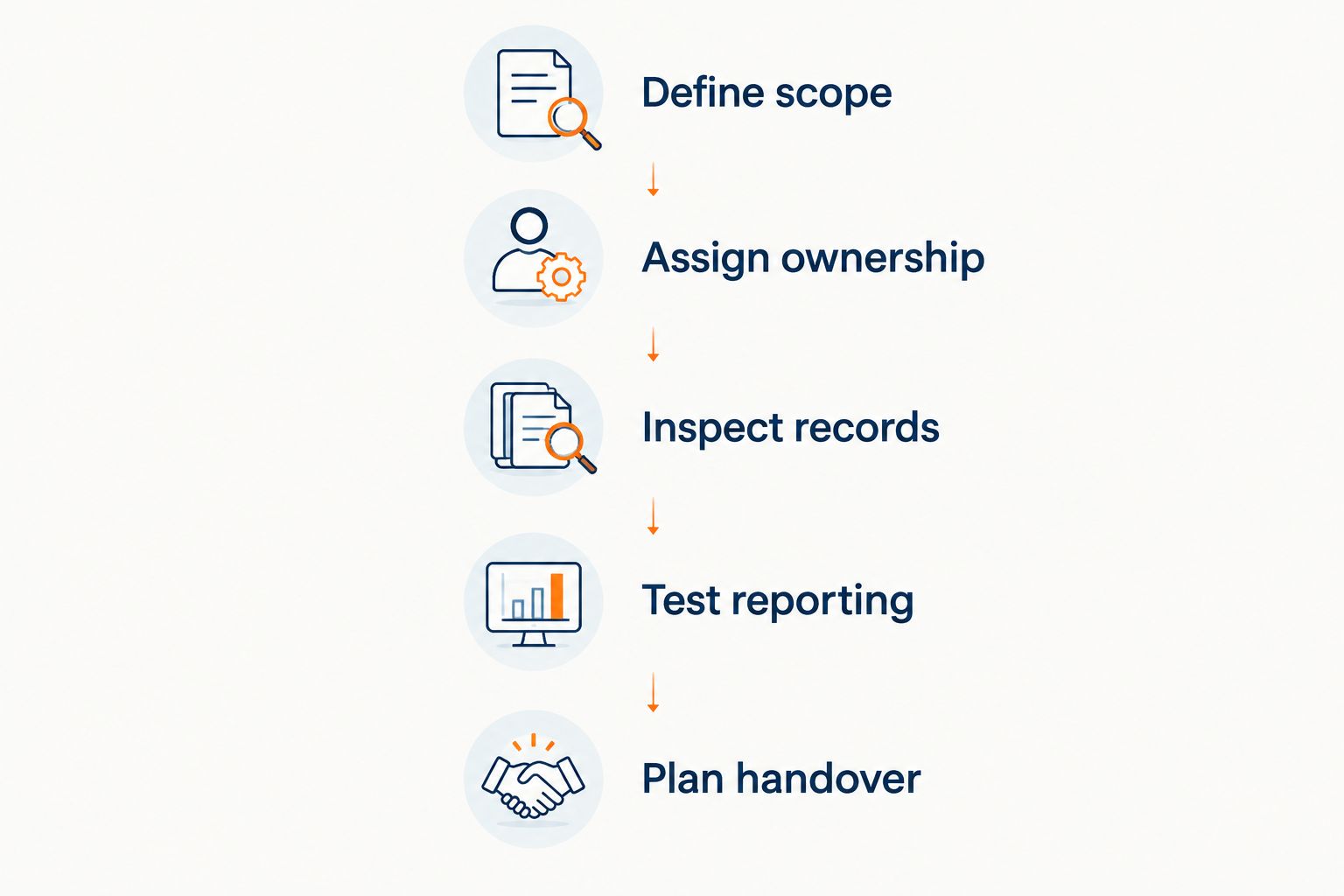
Choose the delivery model after defining the work and its owners.
Your 2026 shortlist should answer those questions in writing. A clear scope is more decision-useful than a feature list because it tells you what gets done and what stays with your business.
When staying with ClearTax is the right call
Stay with ClearTax when the relevant product meets your verified requirements and your accounting work already has competent owners. Do not migrate solely because an alternatives article exists.
Check the product you actually use, its jurisdictional scope and the services in your agreement. ClearTax is a brand, not a substitute for reviewing the specific arrangement you have purchased.
If the software works but the workflow does not, address the workflow first. If preparation and review are covered but reporting needs improvement, define the missing report. Replace the layer that fails your requirements rather than rebuilding the whole stack.
FAQ
What's the best ClearTax alternative for a UAE business in 2026?
Finanshels fits UAE businesses seeking outsourced bookkeeping, tax services and CFO consultation. An in-house team fits businesses prioritising direct control; choose according to who should prepare and review your records.
Is an accounting firm the same as tax software?
No. An accounting firm delivers services within an agreed engagement, while software supports a workflow. Confirm who performs preparation, review and submission rather than assuming the system owns those tasks.
Do I need to replace my software to outsource bookkeeping?
Not necessarily. Decide whether your problem concerns the software or the work around it, then confirm the proposed provider's working arrangement and access requirements.
What should I ask before switching from ClearTax?
Ask which work is included, who reviews it and how unfinished items transfer. Also confirm access, supporting records and the responsibilities that remain with your business.
Is an in-house accountant better than an outsourced firm?
An in-house accountant fits direct operational control; an outsourced firm fits a service-delivery model. The better choice depends on the work required and your capacity to supervise it.
Can I keep my accountant and add a tax specialist?
Yes, you can structure separate preparation and specialist-review roles. Define the handover and identify who resolves questions so that work does not fall between the two roles.
When should I keep ClearTax rather than switch?
Keep ClearTax when its verified product scope meets your needs and preparation and review already have competent owners. Change providers or processes only when you can identify the requirement the current arrangement does not meet.
One last thing
Ask every shortlisted provider: “Which tasks will still belong to my business after this engagement starts?” The answer exposes the boundary between a service and an expectation.
Write that boundary into the scope. A successful accounting arrangement is not one where nobody asks you questions; it is one where every question and unfinished task has a clear owner.
Related guides
- Is outsourced bookkeeping worth it for a UAE startup?
- How to prepare financial statements for corporate tax filing
- CFO consulting for startups in the UAE
Subject specialist: Suhail K Y, CMA® — bookkeeping, finance, audit and CFO.