
Introduction to VAT in UAE
VAT is a mandatory tax for eligible businesses operating in the UAE. It applies at each stage of the supply chain where value is added to products or services. The current standard VAT rate is 5%. VAT (Value Added Tax) is a consumption tax levied on most goods and services in the UAE, introduced in 2018 to diversify revenue sources. This guide will walk you through the VAT registration process in the UAE, ensuring compliance with local tax laws.
If you are in the business sector in the UAE, you understand how critical it is to be compliant with tax legislation. The Federal Tax Authority (FTA) assists in the registration of selected persons to enable them to obtain a Tax Registration Number.

It's key to understand VAT registration for businesses to run well and avoid fines. This article will show you how to register for VAT in the UAE. You'll learn how to handle the process.
Key Takeaways
- The significance of VAT registration in UAE: an overview
- Learning the steps to register for VAT
- Knowing the documents required to register for VAT
- Being aware of the benefits accruing to businesses from registering for VAT
- Understanding the Role of the Federal Tax Authority in Registration for VAT
Understanding VAT in the UAE
To do business in the UAE, knowledge about Value Added Tax is fundamental. VAT in the UAE began on 1st January 2018, at a rate of 5%. It is part of a common system with other GCC countries that are proposing a standard taxation system.
What is VAT and Its Implementation in the UAE
VAT is a tax levied on value added to products and services. It is applicable to tax-supplies made in the UAE. It is therefore essential for one to be aware of their tax responsibilities and requirements for registering in the UAE.
The UAE has a VAT taxation policy that is fair and simple to follow. The policy is based on compliance and keeps the burden of regulations low. The Federal Tax Authority (FTA) is an organization created to oversee the collection of VAT while providing support to businesses.
Current VAT Rate and Taxable Supplies
The standard rate of VAT in the UAE is 5%. This can be charged from the taxpayer on the supply of all the taxable goods and services. When the registered or liable businesses charge this rate, then input tax on expenses may also be claimed. Being aware of which supplies are taxable is quite important in order to follow the process in the UAE for VAT registration.
https://www.youtube.com/watch?v=W9NAksTohLM
The businesses will have to check their supplies for whether they are taxable or not. They have also got to account appropriately for tax. This involves the zero-rated and exempt supplies, since these are supplies that drive tax liability.
Eligibility Criteria to Register for VAT in UAE
Knowing when to register for VAT in the UAE is key for businesses. The Federal Tax Authority (FTA) sets clear rules. These rules decide if a business must register for VAT or if it can choose to do so.
Mandatory Registration Thresholds
Businesses with sales over AED 375,000 a year must register for VAT. This rule applies to most UAE businesses. If your sales hit or go over this mark, you must register.

Voluntary Registration Requirements
Businesses with sales between AED 187,500 and AED 375,000 can choose to register. This lets smaller businesses or those with lower sales register for VAT. It's a choice that can affect your finances and how you follow the rules.
UAE VAT Registration Deadlines
Knowing the UAE vat registration deadlines is essential in order to avoid incurring penalties. If the business is required to register for vat, it must do so within 30 days, while those who are picking can register anytime. However, acting on the advice of a vat registration consultant in UAE ensures this is done on time.
Failure to meet the deadline may result in heavy penalties. Hence, it is important to fulfill the UAE VAT registration deadline to remain compliant.
Step-by-Step Process to Register for VAT in UAE
Registering for VAT in the UAE is key for businesses. It involves several important steps. Each step must be done correctly for a smooth registration.
Creating a Federal Tax Authority (FTA) Account
To begin, create an account on the Federal Tax Authority (FTA) website. Go to the eServices section and start the registration. You'll need to share some basic business and contact info.
To create an FTA account:
- Visit the FTA website and go to the eServices section.
- Click "Register" and follow the instructions.
- Enter your business and contact details.
- Check your email and finish the registration.
Online VAT Registration Process in UAE
With your FTA account all set, you can go ahead and register for VAT online by filling up the application form and submitting the required documents. The online process is easy, and the process is as follows:
- Log on to your FTA account, and look at the section on VAT registration.
- Make sure to correctly and authentically fill in the application form.
- Please upload your business license and financial statements.
Completing the VAT Registration Application
When filling out the application, give detailed business info. This includes financial data and business structure. Make sure all info is correct to avoid delays.
Required Information
Description
Business Details
Give your business name, address, and contact info.
Financial Information
Include your financial data, like income statements and balance sheets.
Business Structure
Describe your business structure, including ownership and management.
Submitting Your Application and Follow-up
After filling out the application, submit it for review. The FTA will check it and might ask for more info if needed.
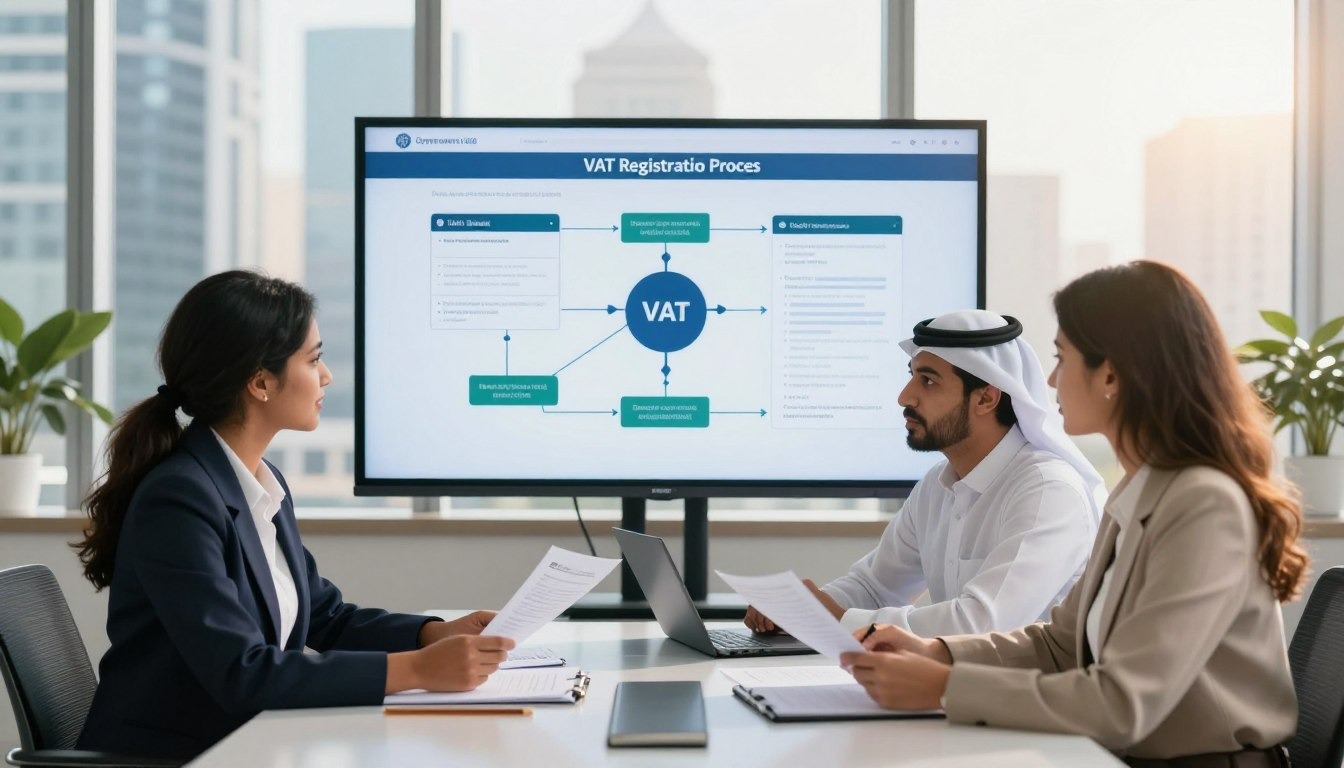
It's important to follow up on your application. This ensures it's processed quickly. You can check your application's status through your FTA account.
By following these steps, you can register for VAT in the UAE successfully. This way, you'll meet the country's tax rules.
Essential Documents and Information Required
To register for VAT in the UAE, you need certain documents and info. The Federal Tax Authority (FTA) wants detailed info to check if you follow VAT rules. Knowing what you need will make the process easier.
Business and Owner Documentation
You must show proof of your business and who owns it. Here are the usual documents:
- Business License: A copy of your business license or certificate of incorporation.
- Passport Copies: Passport copies of the business owners or authorized signatories.
- Emirate ID: Copies of the Emirates ID for the owners or signatories, if applicable.
- Articles of Association: For companies, this document outlines the ownership structure and other critical details.
- Proof of Address: Utility bills or lease agreements to verify your business address.
Financial Information and Bank Details
You also need to share financial info and bank details. This includes:
- Bank Account Details: Details of your business bank account, including the IBAN and SWIFT codes.
- Financial Statements: Recent financial statements, which may include balance sheets and profit & loss accounts.
- VAT Estimates: An estimate of your VAT liability and input tax for the next 12 months.
Having all these documents ready will help make the VAT registration process smoother.
Post-Registration Compliance and Common Challenges
After your UAE business is VAT-registered, it's key to know the ongoing rules. This helps avoid fines and keeps your business running smoothly.
VAT Return Filing Requirements
Also, you need to file your VAT returns regularly, but this must be done every three months. The UAE Federal Tax Authority, or FTA, requires that the process is carried out online.
- File VAT returns on time to avoid incurring late filing fees.
- Ensure your tax computation is correct.
- Maintain all transaction records in order to substantiate your VAT returns.
Record-Keeping Obligations
Keeping accurate records is vital for VAT compliance. You must hold onto all financial records, like invoices and bank statements, for five years.
Important records to keep include:
- Sales and purchase invoices.
- Bank statements and payment records.
- Records of imports and exports.
Working with VAT Registration Consultants in UAE
Handling VAT compliance can be tough. A VAT registration consultant in UAE can help a lot. They make sure you follow all rules and avoid fines.
Consultants can help with:
- Preparing and filing VAT returns.
- Keeping accurate financial records.
- Guidance on VAT matters and compliance issues.
Conclusion
The registration of the VAT in the UAE is also a requirement for businesses to adhere to the regulations of taxation in the country. It is important to understand who needs to register for VAT, the documents required to register for VAT, as well as how a business can register for VAT online.
By doing so, they are legally abiding. Also, they will not incur any fine from the government. The Federal Tax Authority in the UAE makes the registration process easy, as they provide the required assistance to businesses.
After registering your business for the VAT, it is very crucial to comply with the requirements. This includes the need to make VAT returns and maintain records. This way, your business can be compliant and handle taxes effectively.
With the right assistance, the process of VAT registration is easy in the UAE. It helps your business to scale and flourish in the UAE's ever-changing business environment.
FAQ
What is the deadline for VAT registration in the UAE?
In the UAE, the deadline to register for VAT depends on the turnover of your business. Therefore, if you have a business with annual sales above AED 187,500, you will have 30 days after the end of the financial year to register once the year ends.
Can I register voluntarily under VAT in the UAE?
Yes, you can. You can register voluntarily, and this can happen when your annual sales are less than the compulsory registration limit but higher than AED 187,500. One can also register when they anticipate an increase in annual sales to above the compulsory limit.
What documents are required for the registration of VAT in the UAE?
When it comes to registration for VAT in the UAE, there are some essential documents needed. For example, you'll need your license, articles of association, and passport copies. You'll also need financial documents, which include passport and bank statements.
How to fill in the online application for VAT registration in the UAE?
To be registered for VAT online, the first step is to create an account with FTA. After that, you fill out an application form and attach all the required documents. You will also need to provide some financial information and details about your bank.
What are the repercussions of not registering on time for VAT within the UAE?
Failure to register for VAT in time can result in penalties and fines. It is, therefore, very important to ensure timely registration to avoid such penalties.
Can consultants assist in the entire process of VAT registration in the UAE?
Yes, VAT registration consultants can help you in the UAE with the registrations, VAT return filing, and keeping records. They ensure that you follow the rules set by FTA.
How can I file for VAT return in the UAE?
To pay VAT in the UAE, you may need to submit a VAT return through the FTA portal every quarter. You will be required to report all your taxable supplies, imports, and exports, and calculate the amount of VAT you need to pay or the amount due to you from the authority.
What are the Record-Keeping Obligations of VAT-Registered Businesses in the UAE?
VAT-registered businesses in the UAE have the obligation to maintain accurate records. This includes invoices, bank statements, and financial reports, as well as keeping them for a period of five years.
Are there any options for online VAT registration in Dubai?
Yes, an online VAT registration facility is available in Dubai through the FTA portal. Online VAT registration can be done by submitting the necessary documents online.
What is the existing rate of VAT in the UAE?
The current rate of Value Added Tax (VAT) in the UAE is 5%.