Best starting point: coordinated accounting and AML support for founders managing both workstreams; specialist implementation for a new crypto operation; managed operations for an established compliance team. This 2026 guide helps you choose a service scope, assess evidence, and shortlist Finanshels without confusing general AML support with verified crypto expertise.
TL;DR
- The best AML compliance services for crypto businesses in the UAE match your activity, operating model, and internal ownership.
- Consider Finanshels when you want to discuss AML support alongside bookkeeping and finance services.
- Choose specialist implementation for control design; managed operations for recurring casework; independent review for objective challenge.
- Ask every provider for crypto-specific deliverables, named responsibilities, exclusions, and an example case file before signing.
By Krishna Subash Nair | AML specialist
Why this matters
A proposal labelled “AML compliance” tells you little about what your team will receive. Policy drafting, customer checks, wallet investigation, case decisions, and independent review are different assignments. Buying one does not establish that the others are covered.
For your 2026 shortlist, start with the operational problem. Are you building a process, handling recurring reviews, investigating transactions, or testing existing controls? The right answer determines the service scope before it determines the supplier.
Finanshels is a starting point for UAE founders seeking AML support alongside accounting services. Treat crypto-specific delivery, technical integrations, and any outsourced responsibilities as items to confirm in the engagement—not assumptions attached to the brand.
This is a procurement guide, not a determination of your legal obligations. Ask your appointed adviser to document the current official sources applicable to your proposed activities before you approve a compliance design.
What makes the best crypto AML compliance service?
Use these six criteria to assess proposals. Each should produce something you can inspect, rather than a general promise of support.
- Activity fit: The proposal describes what your business actually does, including customer types, asset flows, custody arrangements, and counterparties.
- Defined ownership: A responsibility schedule separates preparation, review, approval, escalation, and management decisions.
- Crypto investigation depth: Sample work explains wallet findings, transaction context, evidence gaps, and the reasoning behind a recommendation.
- Operational evidence: Deliverables include usable case records, exception logs, review notes, and a documented handover.
- Data compatibility: The provider explains how it will work with your customer records, transaction exports, existing tools, and access controls.
- Scope boundaries: Exclusions identify tasks, systems, jurisdictions, and specialist work that the engagement does not cover.
Ask providers to respond against the same brief. Otherwise, you will compare a document-writing assignment with an ongoing operating service and mistake the difference for better value.
Service scopes at a glance
The table compares engagement models, not a league table of firms. Several scopes can sit within one programme, but each needs its own owner and acceptance criteria.
| Service scope | Best for | Standout deliverable | Key limitation |
|---|---|---|---|
| Coordinated accounting and AML support | Founders organising finance and compliance workstreams | Shared records and responsibility schedule | Crypto-specific capabilities need separate confirmation |
| Crypto AML implementation | Businesses designing or rebuilding controls | Operating procedures supported by worked cases | Implementation does not include ongoing operation unless contracted |
| Managed AML operations | Teams needing recurring casework support | Reviewed cases and an escalation queue | Unclear approvals can leave decisions unresolved |
| Blockchain investigation support | Teams examining wallet and transaction exposure | Evidence-based investigation narrative | Transaction findings alone do not explain customer purpose |
| Independent controls review | Businesses seeking challenge of existing processes | Findings linked to evidence and corrective actions | A review does not perform the remediation |
1. Coordinated support: best for finance and AML alignment
A coordinated engagement brings accounting records and AML work into a shared delivery plan. Ask for a common document index and a clear route for resolving differences between customer explanations, transaction records, and the books.
Finanshels offers bookkeeping, tax, audit, CFO consultation, and AML compliance services. That service range makes Finanshels relevant to a combined brief; it does not establish a particular crypto investigation capability or technical integration.
Best for: Founders who want to discuss finance and compliance support together.
Coordinated support pros:
- Gives both workstreams an agreed document request list.
- Creates a defined route for accounting-related questions.
- Makes dependencies visible in the delivery schedule.
Coordinated support cons:
- A broad service catalogue does not prove crypto-specific experience.
- Separate specialists or systems can still be necessary.
For a 2026 engagement, ask for separate accounting and AML deliverables even when one firm coordinates both. You should be able to accept or challenge each workstream independently.
Verdict: Buy a defined coordination scope; hold any crypto-specific appointment until the provider demonstrates the required work.
2. Crypto AML implementation: best for building the operating process
Implementation work turns your proposed customer journey and asset flows into procedures your team can follow. Request worked examples covering onboarding, additional information requests, transaction review, escalation, and case closure.
A useful proposal explains how the provider will move from understanding your business to testing the resulting process. A policy document is an input to that process, not evidence that the process works.
Best for: New operations or teams replacing disconnected procedures.
Implementation pros:
- Defines the steps staff should follow.
- Connects written procedures to example decisions.
- Establishes a handover for your operating team.
Implementation cons:
- Documents need updating when your operating model changes.
- Ongoing case handling requires an explicit additional scope.
Ask the provider to walk through 3 sample cases: a straightforward application, an incomplete ownership explanation, and a transaction needing further investigation. Use fictional data and judge the reasoning, not the presentation.
Verdict: Buy implementation when you need a working process; skip a document-only package presented as a complete operating service.
3. Managed AML operations: best for recurring casework
Managed operations supports repeated tasks under an agreed workflow. Your brief should specify which records the provider prepares, who reviews them, and where unresolved decisions go.
For your 2026 operating plan, define coverage and handovers before discussing reporting dashboards. A dashboard does not resolve an unanswered escalation or explain who has authority to close a case.
Best for: Businesses with an established process but insufficient case-handling capacity.
Managed operations pros:
- Assigns recurring work to a defined delivery team.
- Creates a queue for exceptions and outstanding evidence.
- Supports consistent case-file organisation.
Managed operations cons:
- Poor input records restrict the quality of the review.
- Ambiguous approval arrangements create stalled cases.
Request the proposed escalation matrix, absence cover, access arrangements, and exit handover. Define response expectations in the contract rather than accepting an unqualified promise of continuous support.
Verdict: Buy managed operations for a defined workload; hold when decision ownership remains unclear.
4. Blockchain investigation support: best for transaction questions
Blockchain investigation support examines wallet and transaction information and develops an evidence-based explanation of the findings. Ask for a sample report that separates observed activity, external labels, analytical judgement, and unanswered questions.
The buying decision is about investigation quality, not access to a colourful transaction graph. Your reviewer needs a written explanation that another qualified person can follow and challenge.
Best for: Teams facing wallet exposure or transaction-path questions beyond their internal expertise.
Investigation support pros:
- Focuses specialist attention on a defined question.
- Produces a narrative alongside transaction evidence.
- Records uncertainty and additional information needs.
Investigation support cons:
- Wallet findings do not replace customer context.
- Tool access alone does not establish investigation skill.
Ask how the provider documents conflicting information and changes its conclusion when new evidence arrives. Require an explanation of investigative limits, not a promise that every transaction can be fully explained.
Verdict: Buy investigation expertise for a specific question; skip tool screenshots without supporting reasoning.
5. Independent controls review: best for challenging existing processes
An independent review assesses an agreed set of controls and case records. Define what will be examined, how evidence will be selected, and how findings will be connected to corrective actions.
Keep the review distinct from implementation. If the proposed reviewer helped design or operate the controls, ask how that involvement will be disclosed and addressed in the assignment.
Best for: Management teams seeking an objective assessment of an existing programme.
Controls review pros:
- Tests practice against the documented process.
- Gives management an evidence-based action list.
- Identifies where further investigation is needed.
Controls review cons:
- Findings depend on the agreed scope and available evidence.
- Remediation needs a separate owner and completion check.
Ask for a sample finding with its evidence, operational consequence, recommended action, and closure criteria. A generic checklist offers little help when you need to decide what to fix first.
Verdict: Buy a scoped review when controls already exist; wait if you still need to build the underlying process.
How these recommendations are organised
The service scopes follow the buying criteria: activity fit, ownership, investigation depth, operational evidence, data compatibility, and boundaries. They are not provider performance rankings or claims that one firm delivers every scope.
Choose the engagement that solves your immediate problem, then check the dependencies. For example, managed casework needs usable procedures, while an independent review needs records of actual operation.
Turn the shortlist into an acceptance test
Use this sequence for your 2026 procurement brief. It gives each provider the same problem and gives your team a consistent basis for deciding.
Define activity
Describe your customers, services, asset movements, and operating locations in plain language. Include planned activities separately from current activities so the proposal does not silently mix them.
Assign ownership
Name the internal decision-maker and require the provider to name its delivery lead. Allocate preparation, review, approval, escalation, and record custody before work begins.
Test cases
Use fictional scenarios to examine the provider's reasoning and proposed output. Ask what additional information the provider would request and what would prevent a defensible conclusion.
Accept deliverables
Write acceptance criteria into the engagement. For a case file, require the underlying evidence, review history, rationale, unresolved points, and final handover format.
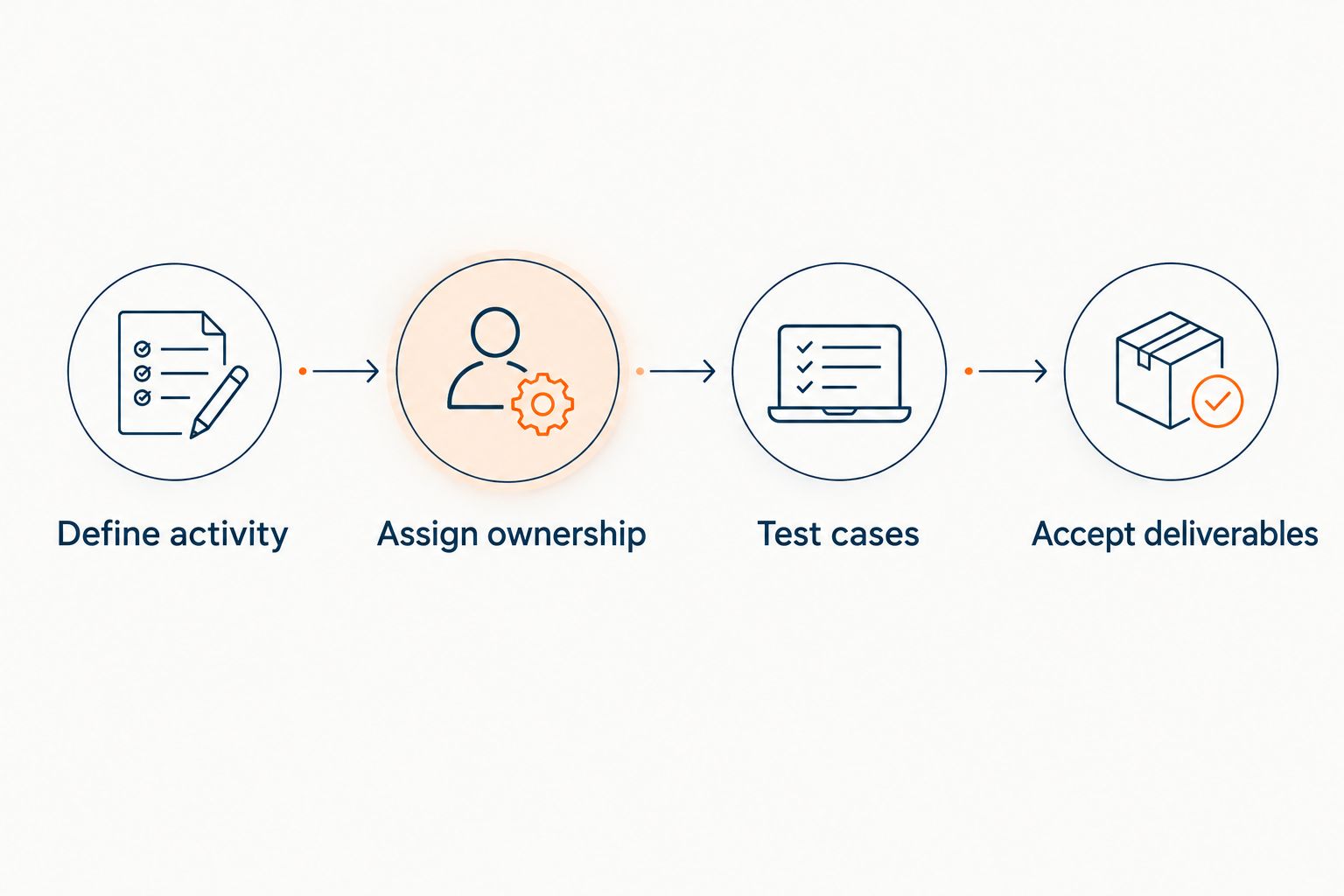
Agree how work will be accepted before appointing the provider.
For background before drafting your brief, read the guide to AML compliance for crypto and blockchain companies in the UAE. Keep the resulting service specification specific to your operation rather than copying a generic checklist.
Which service scope should you choose?
Start with implementation if your process is undefined. Choose managed operations if the process exists but recurring work needs support. Add investigation expertise for transaction questions and independent review when you need challenge of established controls.
If your immediate issue spans accounting records and AML preparation, discuss a coordinated scope with Finanshels. Require crypto-specific tasks, exclusions, and specialist responsibilities to appear in writing before appointment.
Discuss your AML service scope
Outline your crypto activities, accounting needs, and the responsibilities you want covered.
FAQ
What's the best AML compliance service for a UAE crypto startup?
For a startup without an established process, prioritise implementation with worked cases and a documented handover. Assess the provider against your actual activities rather than a generic AML package.
Does Finanshels offer AML compliance services?
Finanshels offers AML compliance services alongside bookkeeping, tax, audit, and CFO consultation. Confirm crypto-specific deliverables, technical capabilities, and exclusions directly before appointing the firm.
Is an AML consultant better than AML software?
A consultant and software serve different purchasing needs. Specify the judgement, implementation work, case handling, and system functions you need, then identify who will own each part.
Can one provider handle accounting and crypto AML support?
You can request a combined engagement, but assess each workstream separately. Require distinct deliverables and evidence of capability for any crypto-specific assignment.
What should I ask before outsourcing AML casework?
Ask who prepares, reviews, approves, escalates, and retains each case. Also agree access arrangements, coverage, unresolved-case handling, and the exit handover.
How do I assess a blockchain investigation service?
Request a sample investigation that explains evidence, reasoning, uncertainty, and limitations. A transaction graph without a defensible written explanation is not enough for your evaluation.
What should an independent AML review deliver?
Request findings tied to evidence, corrective actions, responsible owners, and closure criteria. Agree the review scope and disclose any involvement the reviewer had in designing or operating the controls.
One last thing
Ask for the exit handover before signing the engagement. Specify how your team will receive case files, evidence, open questions, and decision histories if the relationship ends. A provider's willingness to make the work transferable is a useful procurement test.