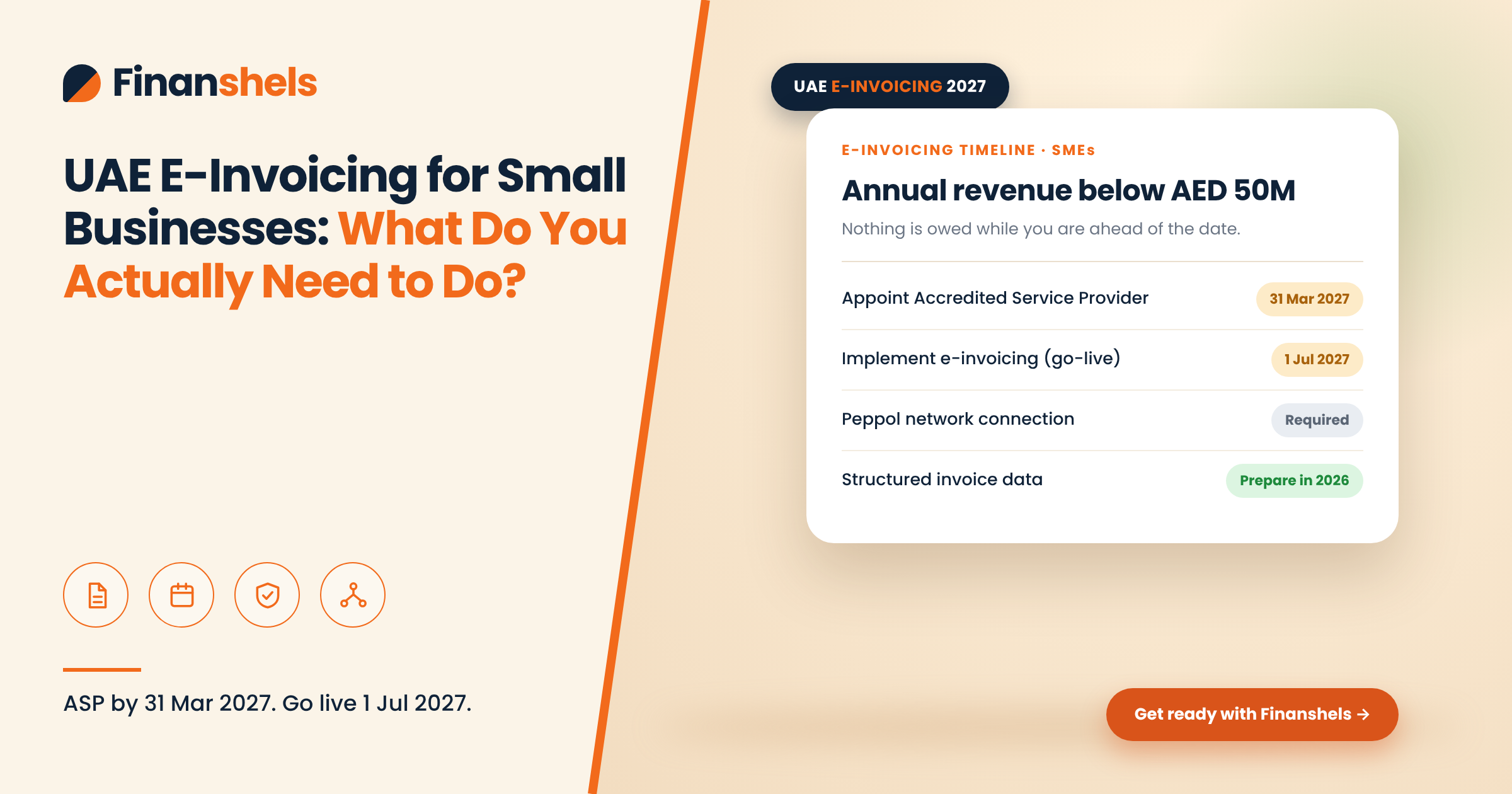
If your UAE business has annual revenue below AED 50 million, you generally need to appoint an Accredited Service Provider (ASP) by 31 March 2027 and implement e-invoicing by 1 July 2027, provided your business falls within the system's scope.
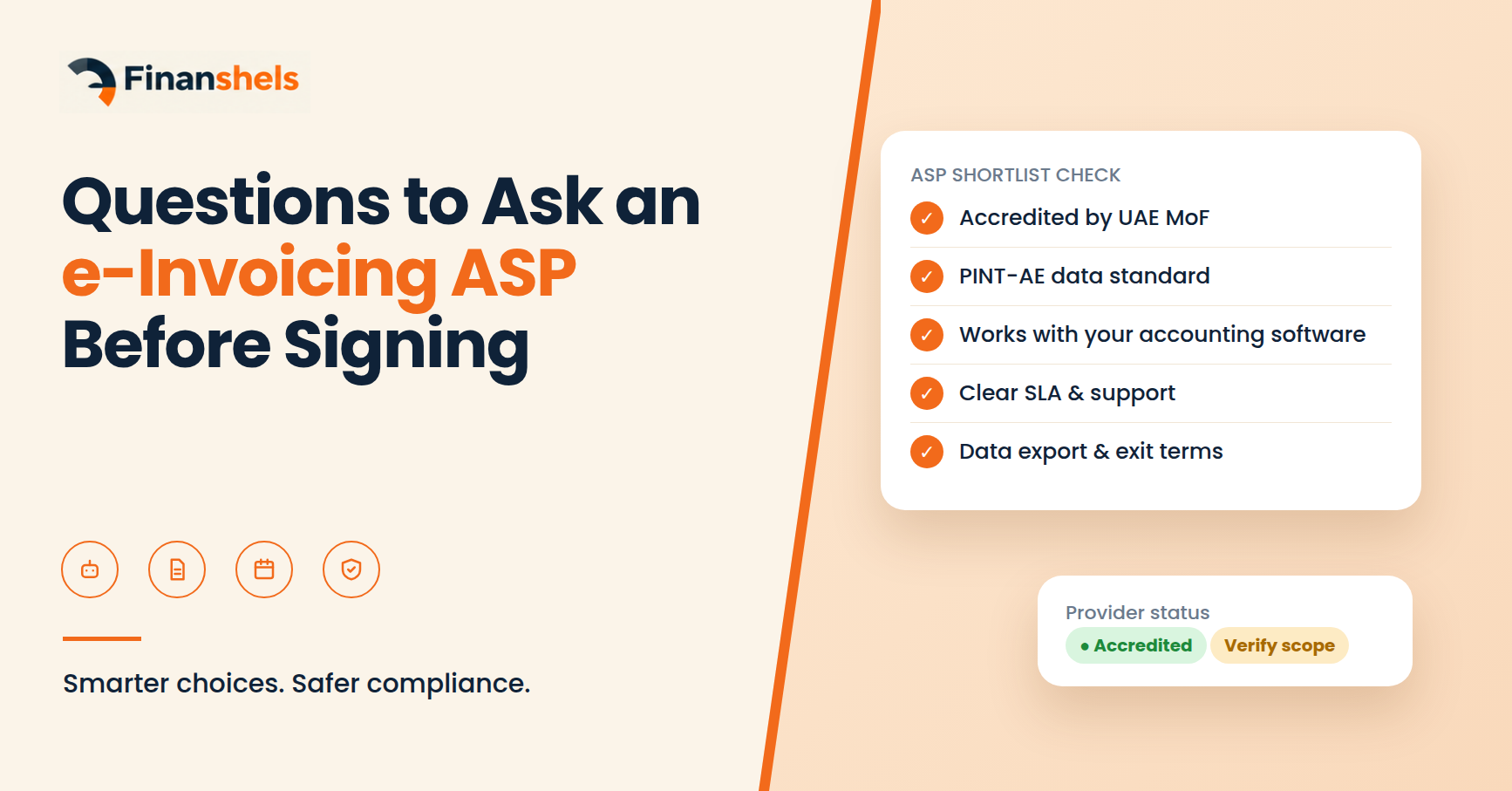
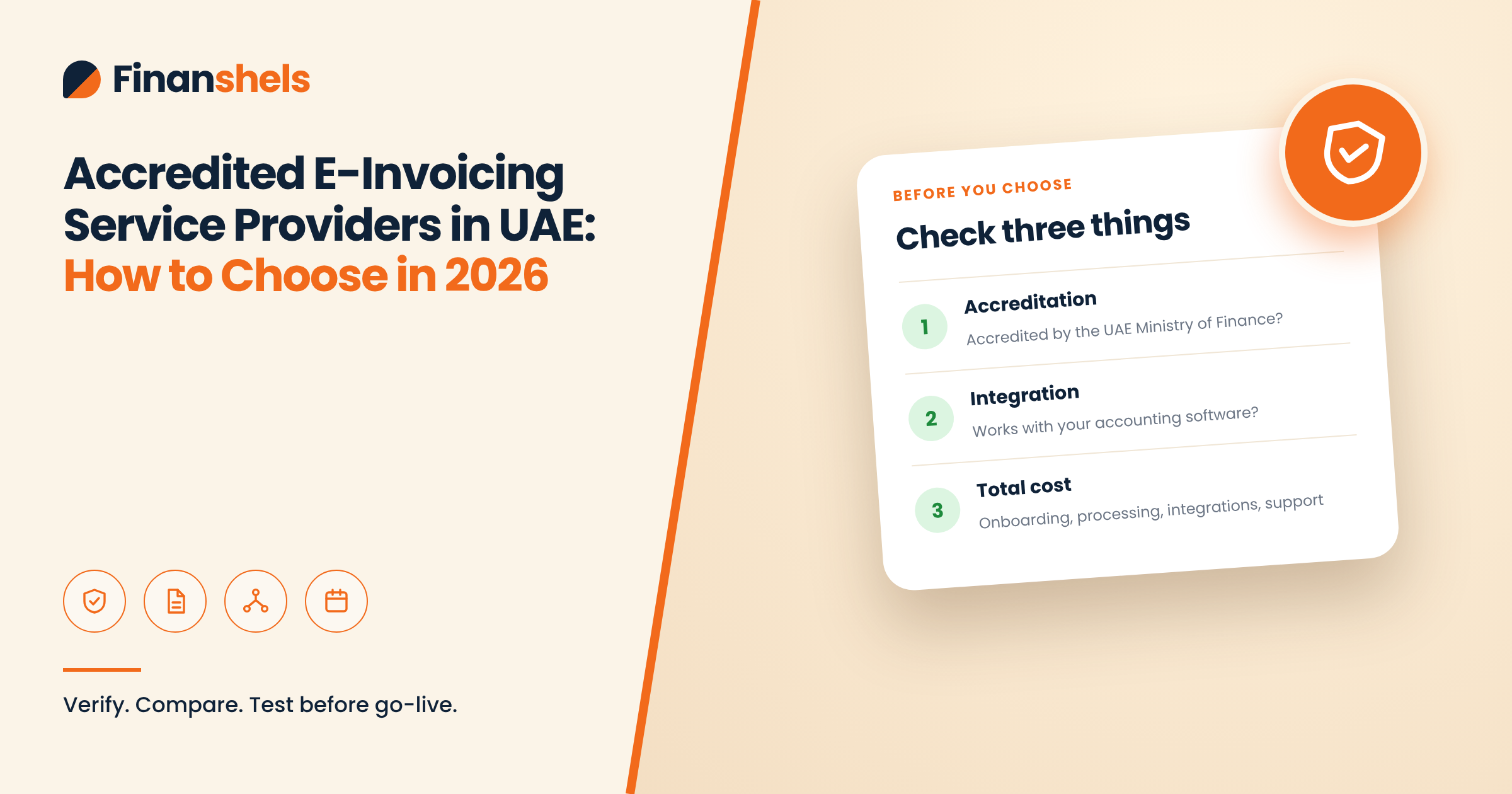
You might also wonder: Which e-invoicing software is accredited in the UAE? The Federal Tax Authority (FTA) works with Accredited Service Providers (ASPs) to facilitate invoice exchange through the Peppol network. Rather than choosing software based on a general claim of accreditation, businesses should verify the provider's UAE accreditation status and check whether their existing accounting or ERP system can integrate with it. Our guide to choosing an e-invoicing solution in the UAE explains the main criteria to compare.
Preparing for e-invoicing involves more than choosing software. Your business needs accurate invoice data, the correct tax identification details, and a working connection to an accredited provider. In this guide, we’ll walk you through everything you need to know for readiness for e-invoicing in the UAE as an SME owner. For a broader overview, see our UAE e-invoicing requirements and implementation guide.
Key Takeaways
- Mandatory deadline: The scheduled Phase 2 go-live date for businesses in scope is July 1, 2027.
- SME scope: Businesses with annual turnover below AED 50 million should assess their applicable implementation requirements and deadlines.
- Software accreditation: Verify the provider's UAE accreditation status rather than assuming that any accounting software with e-invoicing features is accredited.
- Invoice data: Review your customer information, tax identifiers, invoice details, and other required data fields before implementation.
- Group structures: Businesses operating through multiple legal entities should confirm the registration and identification requirements for each entity.
- Preparation: Use 2026 to assess software compatibility, resolve data gaps, and plan testing before your applicable deadline.
Verify Your Phase 2 Eligibility and Deadlines
Step 1: Confirm Your E-Invoicing Implementation Timeline
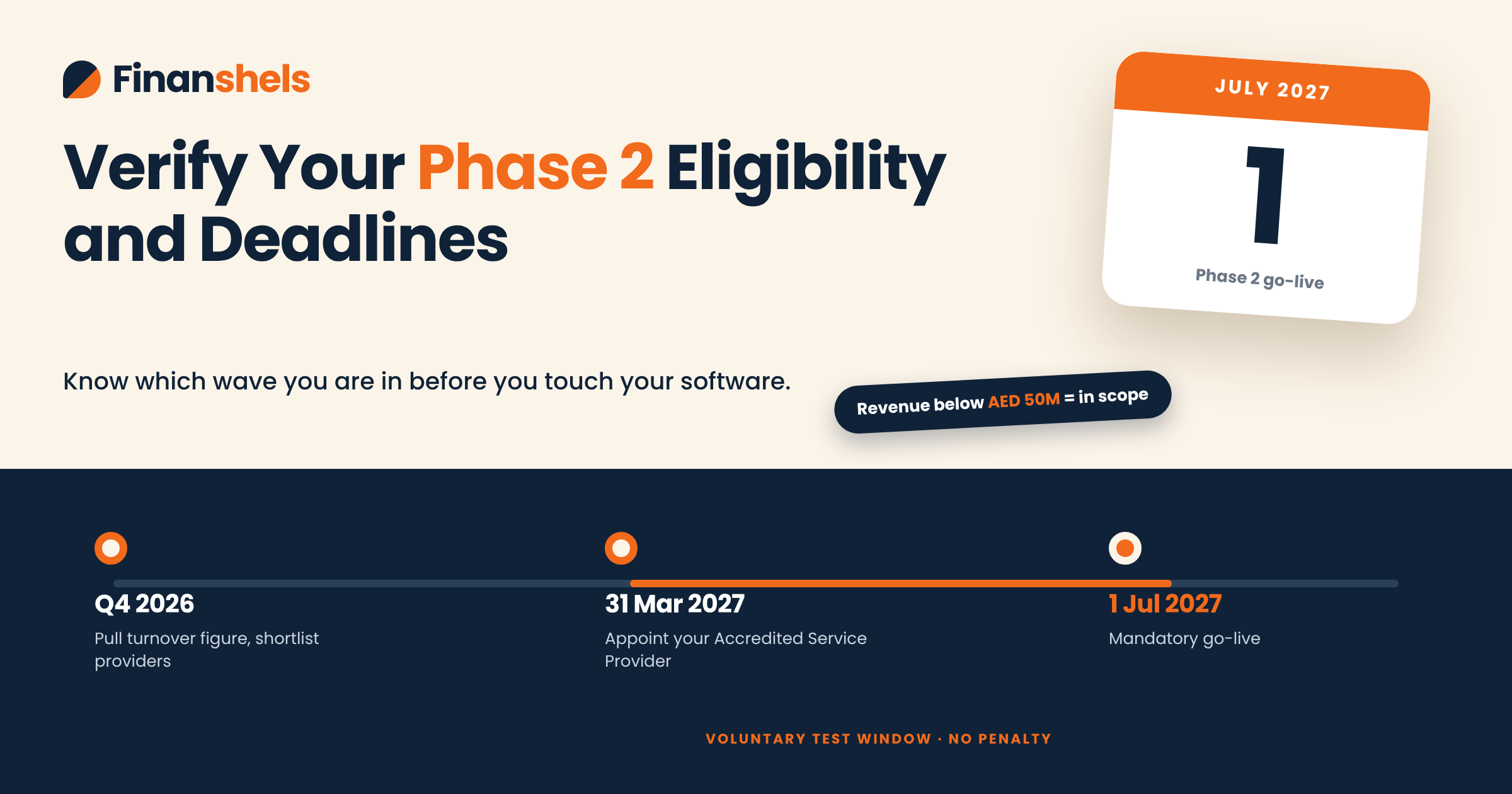
Before touching your software, confirm which rollout wave your business sits in. Phase 2 targets businesses with turnover below the AED 50 million threshold established in earlier phases, which captures the bulk of UAE SMEs. If your annual revenue sits under that line, you are in scope, and the assumption that e-invoicing is a large-enterprise problem will cost you.
Pull your audited turnover figure for the relevant assessment period and document it. That single number determines your wave, your preparation window, and the point at which voluntary testing stops being optional.
Hard deadline: the mandatory go-live date for Phase 2 is July 1, 2027.
Treat the months before that date as a testing window, not a buffer. Voluntary onboarding lets you push test invoices through an Accredited Service Provider and fix rejected submissions without penalty exposure. After go-live, a malformed invoice is a compliance failure.
Any credible UAE e-invoicing timeline works backward from July 2027, and the first milestone is knowing that you qualify.
Step 2: Audit Your Data for Required Invoice Fields
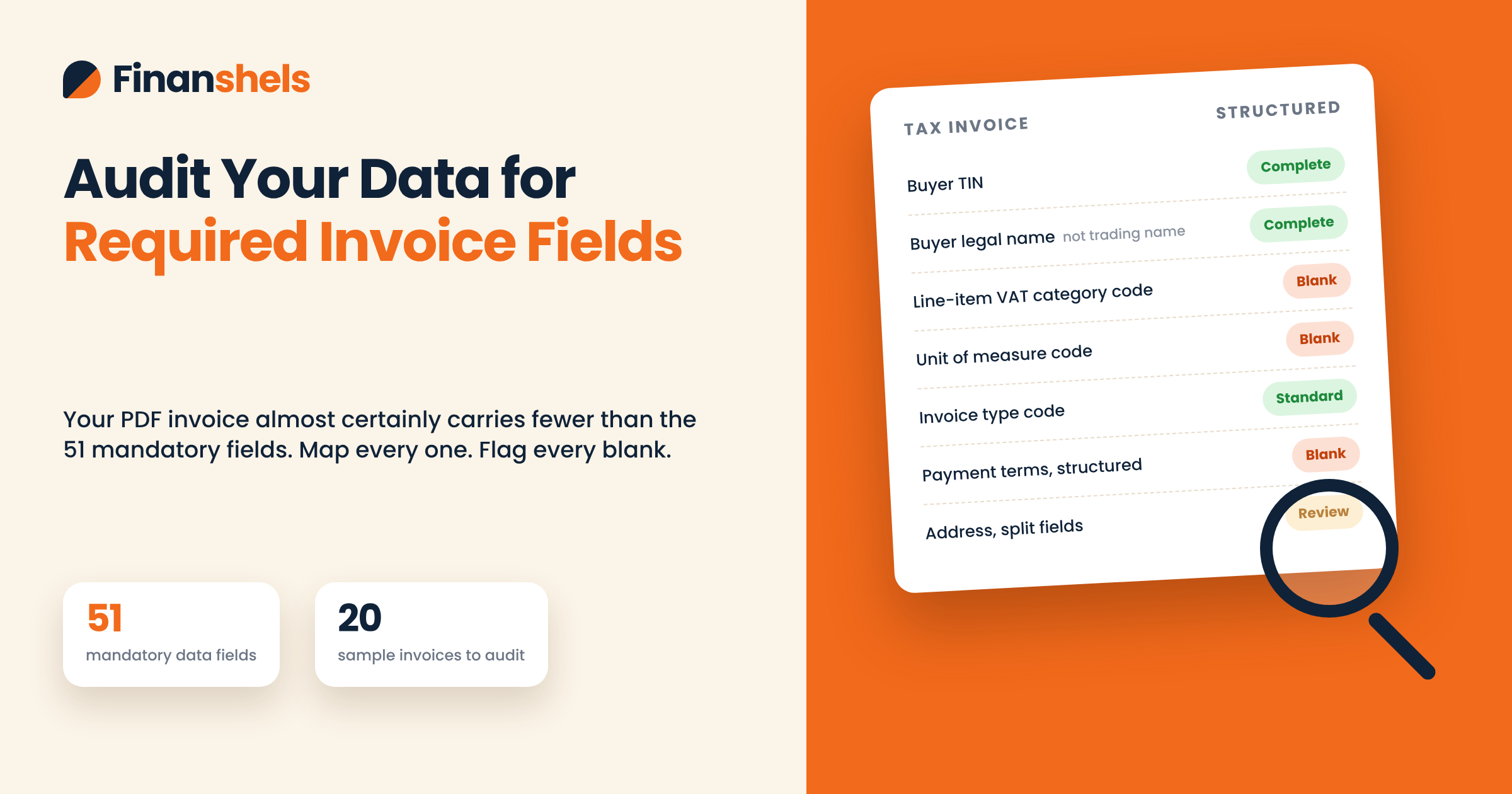
The UAE e-invoicing standard requires the inclusion of 51 mandatory data fields. Your current PDF invoice almost certainly carries fewer. Export a sample of 20 recent invoices and map every field your system populates against the FTA's structured schema. Flag every blank.
Most gaps sit in customer master data rather than invoice logic. Your system can generate the field, but nobody ever collected the value.
Check these first:
- Buyer Tax Identification Number (TIN) for every registered customer
- Buyer legal name exactly as registered, not trading name
- Line-item level VAT rates and tax category codes
- Unit of measure codes for each line
- Invoice type code (standard, credit note, debit note)
- Payment terms and due date in structured format
- Supplier and buyer address fields broken into separate components
Current UAE tax invoice requirements under VAT assume a human reads the document. Phase 2 assumes a machine validates it, so a missing field can block transmission.
Run this audit in 2026 while you still have time to chase customers for their identifiers.
Step 3: Register Each Tax Group Member Individually
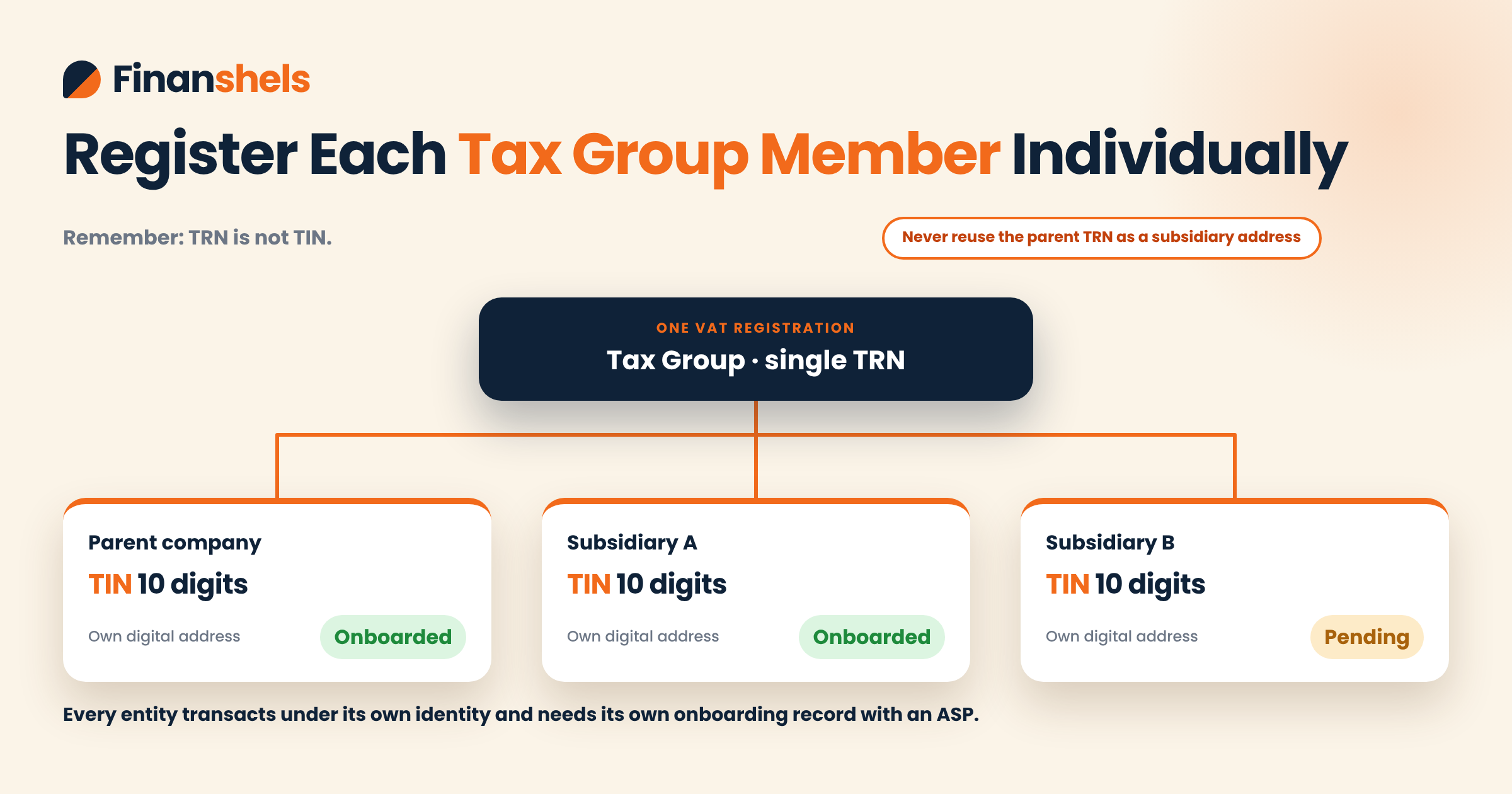
A Tax Registration Number and a Tax Identification Number are not interchangeable, and conflating them is the most common registration error among group structures. Your TRN is the VAT registration identifier you already use. The TIN is a 10-digit number tied to the individual legal entity, and it is what the e-invoicing network uses to route documents.
Tax groups file VAT under a single TRN. The e-invoicing network does not work that way. Each member entity transacts under its own identity, which means each one needs its own digital address and its own onboarding record with an Accredited Service Provider.
Pro Tip for Tax Group managers: Build a register listing every group member, its legal name, its TIN, and its ASP onboarding status. Assign one owner to that register. Groups fail this step not because the rule is complex but because nobody is accountable for subsidiary-level registration.
Do not use the parent company's TRN as the digital address for a subsidiary. Invoices issued by that subsidiary may route incorrectly or fail validation, and the error might surface only when a customer reports a missing invoice.
Step 4: Configure Your Peppol Participant Identifier
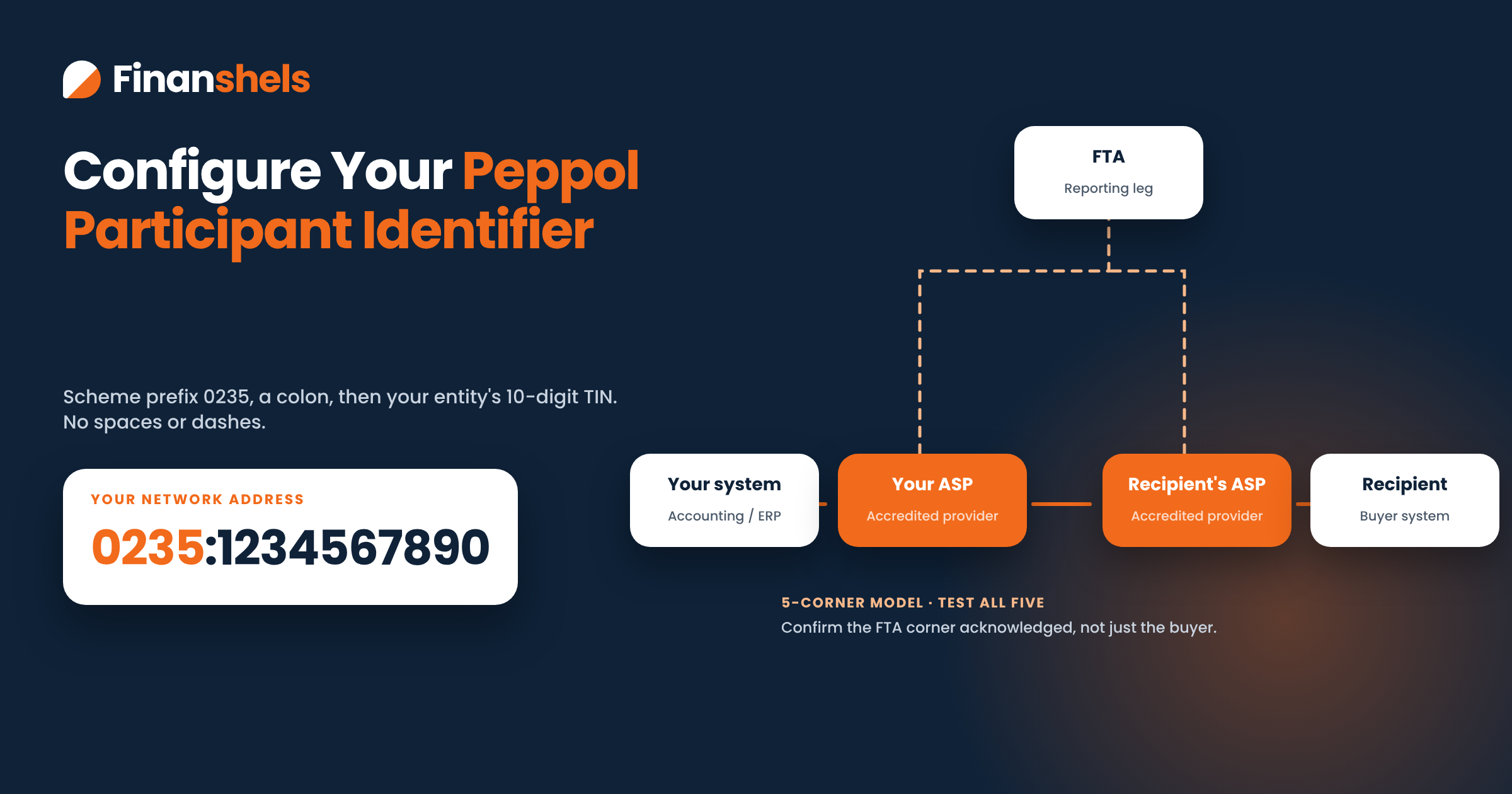
Your Peppol Participant Identifier is the address other businesses use to send you documents across the network. It follows a fixed structure: a scheme prefix identifying the UAE, followed by your entity's 10-digit TIN.
The 0235 prefix is the scheme identifier assigned to UAE tax identification. It is not optional and it is not interchangeable with prefixes used in other Peppol jurisdictions.
Work through the setup with your IT team or ASP:
- Confirm the 10-digit TIN for the specific legal entity being registered, not the group.
- Format the identifier as the 0235 prefix, a colon separator, then the TIN with no spaces or dashes.
- Submit the identifier to your Accredited Service Provider for registration on the network directory.
- Verify the entry resolves in the directory lookup before you send anything live.
- Send a test invoice through the 5-corner model: your system, your ASP, the recipient's ASP, the recipient, and the FTA reporting leg.
- Confirm the FTA reporting corner acknowledged the document, not just the recipient.
A test that reaches the buyer but never registers with the tax authority is a half-configured setup, and it will read as compliant until an audit says otherwise.
How to Finalize Your 2026 E-Invoicing Readiness
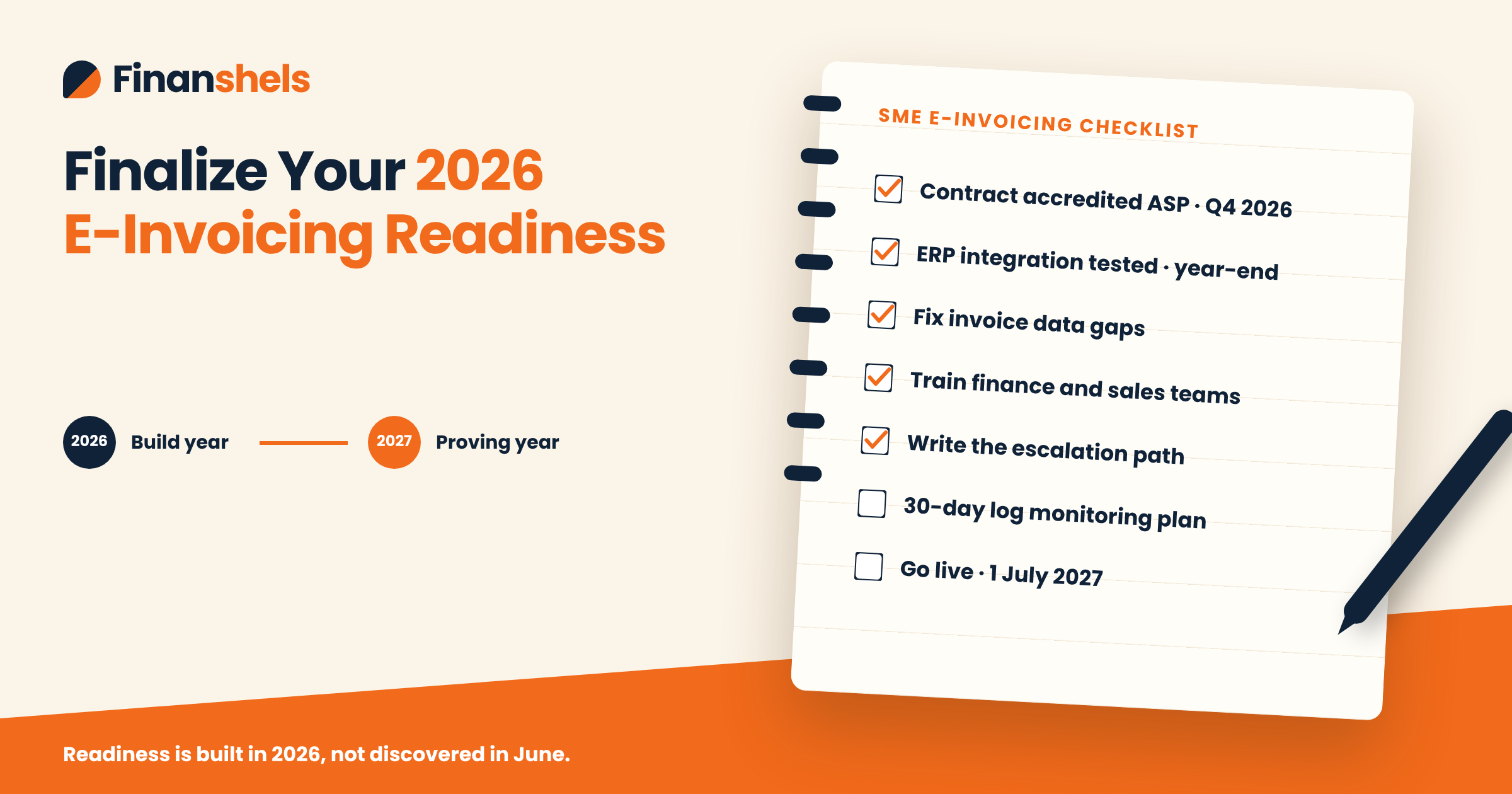
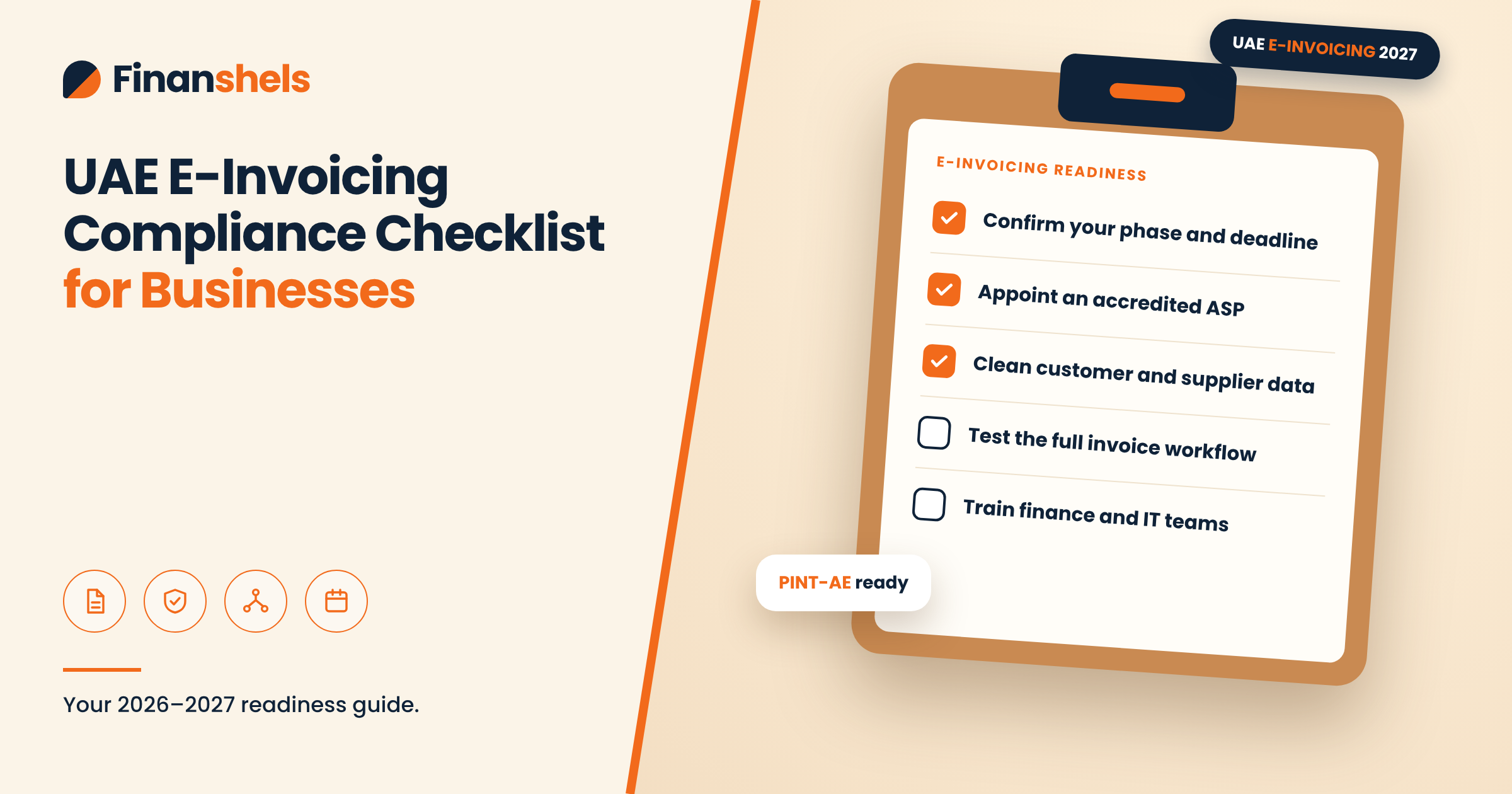
Treat 2026 as the build year and 2027 as the proving year. Work through this SME e-invoicing checklist in order:
- Select and contract your Accredited Service Provider by Q4 2026. Confirm the provider is accredited specifically for the UAE mandate. General Peppol capability or international e-invoicing support does not automatically qualify. Ask for the accreditation reference directly.
- Complete ERP or accounting system integration before year-end 2026. This includes the data field remediation from Step 2 and the participant identifier setup from Step 4, tested end to end.
- Train the finance and sales teams on the new submission workflow. Staff need to know what a rejected invoice looks like, who fixes it, and how long they have. Document the escalation path in writing.
- Build a 30-day monitoring plan for the July 2027 go-live. Assign someone to review transmission logs daily for the first month, tracking rejection rates and clearance failures by cause.
The gap between a VAT-compliant PDF and a network-validated structured document is wider than most finance teams expect. Any practical UAE e-invoicing guide ends the same way: start the data audit now, because e-invoicing UAE 2027 readiness is built in 2026, not discovered in June.
Frequently Asked Questions About UAE E-Invoicing
1. Is e-invoicing mandatory for small businesses in the UAE?
Yes, if the business falls within the scope of the applicable implementation phase. For businesses in the relevant category with annual turnover below AED 50 million, the scheduled mandatory go-live date is July 1, 2027. Confirm your company's eligibility and applicable deadlines before relying on the general timeline.
2. Which e-invoicing software is accredited in the UAE?
Accreditation applies to service providers under the UAE framework. Businesses should check the FTA's current list of Accredited Service Providers and confirm that the provider is approved for the relevant UAE requirements. Your existing accounting software may still be usable if it can integrate with the selected provider.
3. Do small businesses need to replace their accounting software?
Not necessarily. First, check whether your current accounting or ERP system supports the required structured invoice format and can integrate with an appropriately accredited service provider. You may need an integration or configuration update rather than a complete software replacement.
4. When does UAE e-invoicing become mandatory for SMEs?
The scheduled Phase 2 implementation date for businesses in the relevant category is July 1, 2027. However, businesses should confirm the applicable requirements and deadlines for their individual circumstances and monitor official FTA announcements for updates.
5. What is the difference between a PDF invoice and an e-invoice?
A PDF invoice is generally designed to be read by a person. An e-invoice under the UAE framework uses structured data that systems can process, validate, and exchange electronically. Sending a PDF by email alone does not necessarily satisfy the e-invoicing requirements.
6. What information should a small business prepare before implementing e-invoicing?
Start by reviewing customer legal names, tax identification details, supplier information, VAT treatment, invoice line items, payment terms, and address fields. Check your system's ability to generate the required structured data and resolve missing information before testing begins.
7. Do companies in a UAE VAT tax group register each entity separately?
Businesses with multiple legal entities should confirm the identification and onboarding requirements applicable to each entity. Do not assume that a group's shared VAT registration automatically replaces the entity-level identification requirements of the e-invoicing framework.
8. What should a UAE SME do first to prepare for e-invoicing?
Confirm your implementation deadline, review your invoice data, check your accounting software's compatibility, and identify suitable accredited service providers. Starting early gives your team time to correct data gaps, configure integrations, and test invoice transmission before the applicable deadline.
Important: E-invoicing requirements and implementation details can change. Verify the latest UAE e-invoicing guidance, provider accreditation, and applicable deadlines with official FTA sources before making compliance decisions.
This article provides general information, not individual tax or legal advice. Confirm the rules applicable to your business with the UAE Ministry of Finance, the Federal Tax Authority or a qualified adviser.